
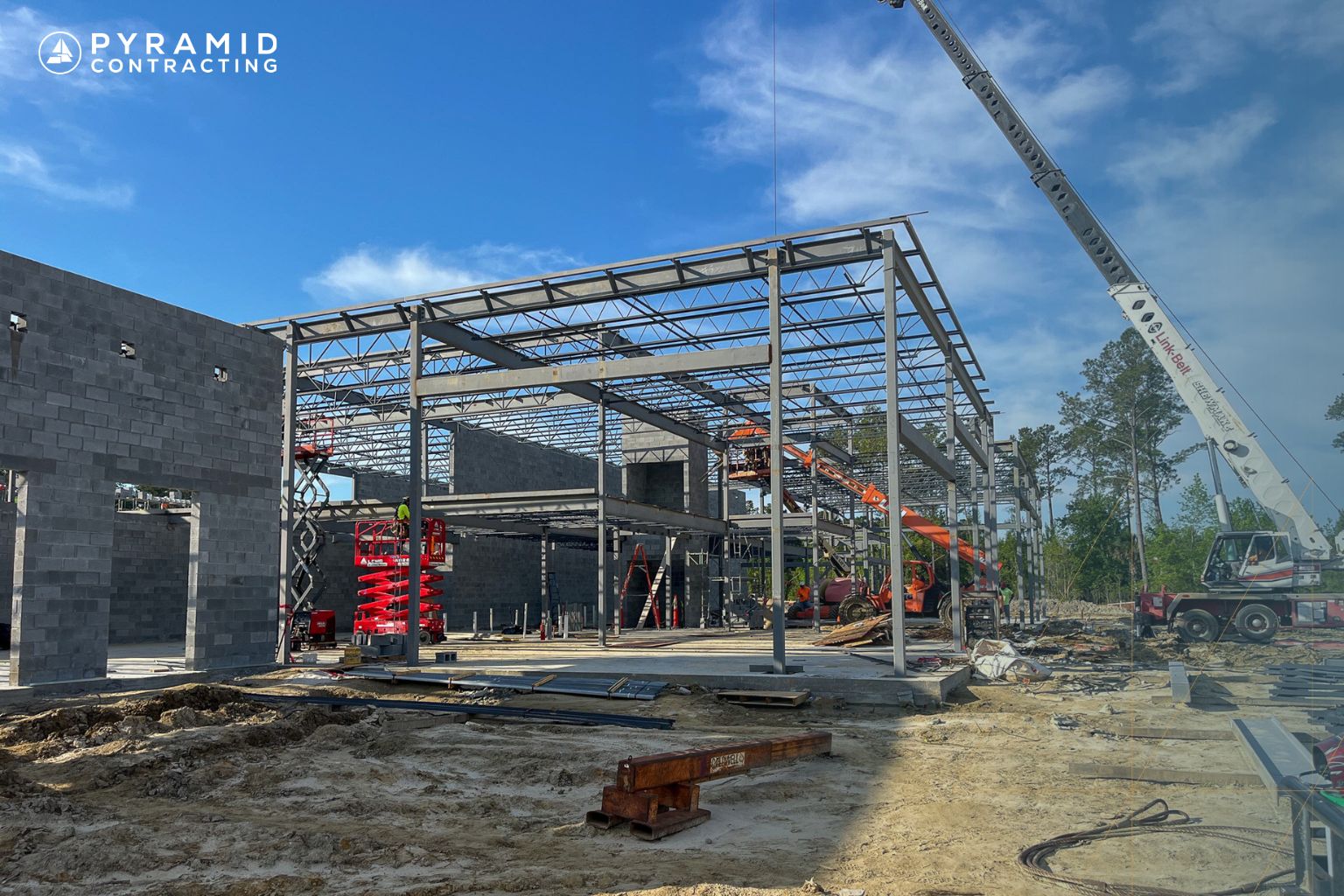
Building Through Hurricane Season: Why Dry-In Dates Matter More Than Start Dates
Every spring, commercial owners in South Carolina, North Carolina, and Georgia face the same question: should we start now and build through hurricane season, or wait until winter?
The better question is different: when can the building be dried in?
A project that reaches dry-in before peak tropical activity carries a very different risk profile than one entering roofing, envelope, or MEP rough-in during late August or September.
Why Dry-In Is the Real Scheduling Milestone
Atlantic hurricane season runs from June 1 through November 30. Activity typically increases during late summer, and NOAA identifies September 10 as the climatological peak of Atlantic hurricane season.
That does not mean construction should stop during hurricane season. It means the schedule should be built around exposure.
For commercial owners, the highest-risk period is often not the start of construction. It is the point when the structure, roof, envelope, stored materials, and partially completed interiors are most vulnerable to wind-driven rain and schedule disruption.
The Planning Mistake Owners Make
Many schedules focus on the notice-to-proceed date. That is important, but it is not enough.
A better schedule answers these questions:
- When will sitework be complete enough to support vertical construction?
- When will structural steel or framing be released and delivered?
- When will the roof be installed?
- When will exterior walls, openings, and glazing be complete?
- When will the building be dry enough to protect MEP rough-in and interior finishes?
- What weather contingency is built into the critical path?
Weather Contingency Should Be Real, Not Decorative
For many Southeast commercial schedules, we commonly evaluate 12 to 20 weather-contingency days depending on project duration, site conditions, and the dry-in target. The correct number depends on the job.
The key is to show those assumptions clearly. If the schedule has no visible weather logic, the owner is not seeing the real risk.
Procurement Can Create Weather Risk
Weather risk is not only caused by storms. It can also be caused by late procurement.
If steel, roofing, switchgear, rooftop units, curtainwall, or specialty doors are released late, the dry-in date can move directly into peak storm season. That can increase general conditions, temporary protection, rework exposure, and owner frustration.
A good procurement log should show:
- Supplier confirmation, not just subcontractor confirmation.
- Shipping origin.
- Submittal status.
- Release date.
- Fabrication duration.
- Estimated ship date.
- Required-on-site date.
- Risk notes and recovery actions.
The Owner Communication Rule
Owners should never discover weather or procurement risk after the schedule has already slipped. If the dry-in date is moving, the owner needs to know early.
The strongest project teams discuss weather exposure before it becomes a problem. They show the schedule logic, explain the risk, and present options before the owner has to ask.
Bottom Line
In the Southeast, the question is not simply whether to build during hurricane season. The better question is whether the project schedule controls the building’s exposure during hurricane season.
For owners, the dry-in date is one of the most important risk milestones on the entire schedule.

