
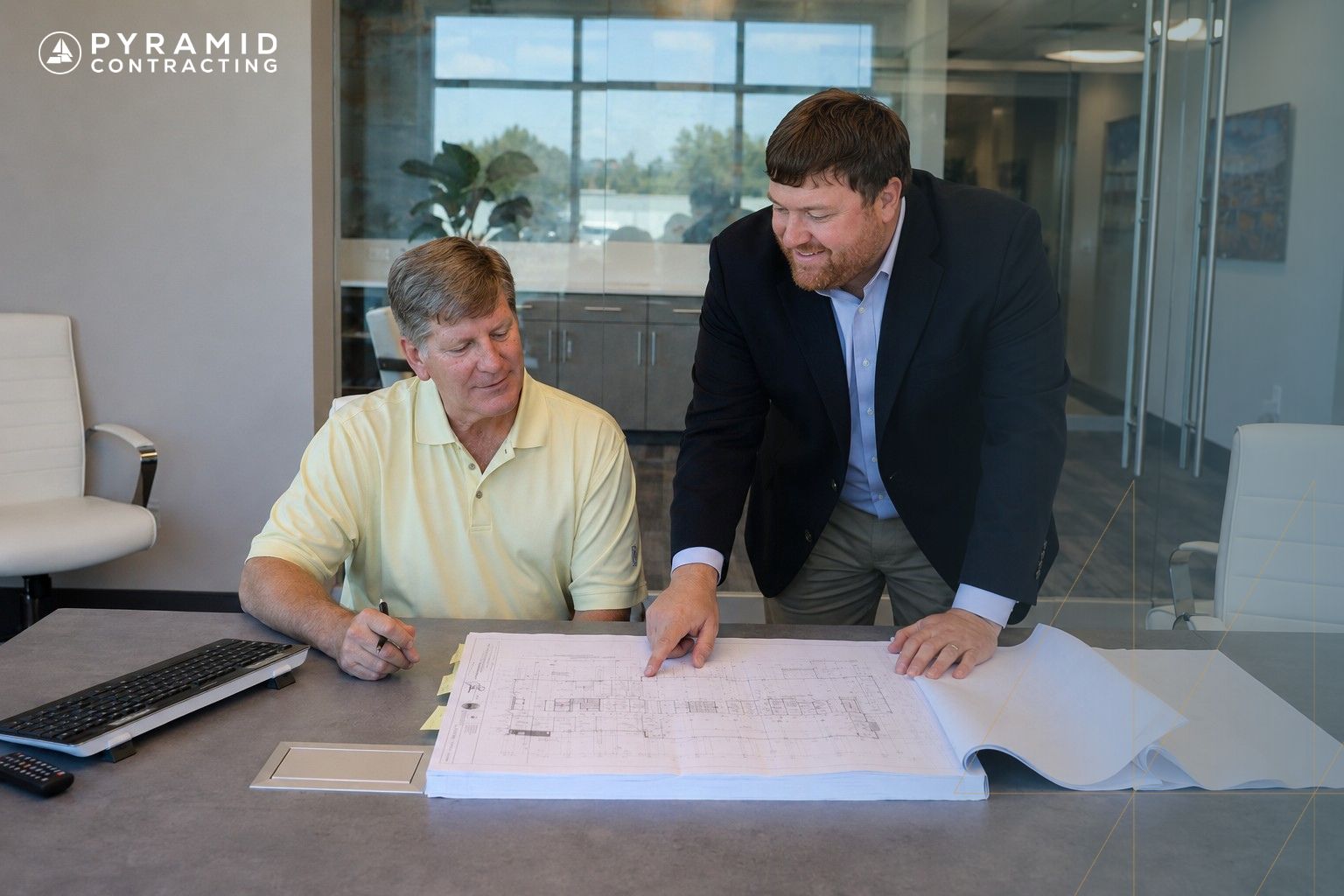
The Hidden Cost of Weak Pre-Construction: How Early Planning Protects Commercial Project Budgets
Most commercial owners focus on what happens after construction starts. But many of the most expensive project decisions are made months earlier, before permits, buyout, mobilization, or the first shovel in the ground.
At Pyramid Contracting, we have seen the same pattern across commercial, industrial, automotive, federal, and adaptive reuse projects throughout the Southeast. Projects that protect budget and schedule usually have one thing in common: they treat pre-construction as a disciplined process, not a pricing exercise.
What Pre-Construction Should Actually Cover
Pre-construction is the phase between ‘we want to build’ and ‘we are ready to sign the construction contract.’ Done right, it is where the project gets de-risked. Done poorly, it is where future change orders, schedule slips, and value-engineering problems get built into the job before construction even begins.
A complete pre-construction process should include:
- Conceptual estimating at key design milestones so the owner can see cost movement early.
- Constructability review before drawings are issued for permit.
- Site due diligence, including geotechnical, environmental, civil, and utility coordination.
- Procurement planning for long-lead items such as switchgear, steel, rooftop units, and specialty glazing.
- Permitting and AHJ coordination based on the actual municipality, not a generic review duration.
- Subcontractor prequalification, bid leveling, and scope-gap review.
- Value engineering before the drawings are locked, not after the budget is already broken.
Key takeaway: Pre-construction is not a quote. It is a structured process that turns an owner’s vision into a defensible budget, schedule, and procurement plan.
Why This Phase Matters More Than Ever
The construction industry has a long history of projects running over budget and behind schedule. McKinsey’s analysis of more than 500 large capital projects found average cost overruns of at least 79% and average delays of 52% compared with initial estimates.
That does not mean every commercial project will experience that level of exposure. But it does show why owners should not treat early planning as optional. Even a much smaller overrun on a $12 million project can create seven-figure financial pressure.
The pattern is familiar:
- The owner selects the contractor with the lowest early number.
- The low number is based on incomplete assumptions.
- Scope gaps, procurement issues, or design conflicts appear later.
- The owner faces change orders, RFIs, and schedule extensions after leverage is gone.
The Most Expensive Pre-Con Is the One That Does Not Find Problems
Unstructured pre-construction often functions more like a pricing exercise than a risk-control process. A stronger process should challenge the budget, test the drawings, and identify the decisions that could affect the schedule.
On a recent automotive dealership project in the Lowcountry, our team identified a site grading issue during geotechnical and civil review. Catching the issue during pre-construction allowed the team to adjust the stormwater approach before the construction contract was finalized. That early review avoided what could have become a six-figure change order, a schedule delay, and an owner-contractor dispute.
The owner lesson is simple: the goal of pre-construction is not to make the early number look good. The goal is to make the final number more reliable.
Questions Owners Should Ask Before Trusting a Pre-Con Budget
- What design milestone is this estimate based on?
- What scope is excluded or assumed?
- Which long-lead items have been confirmed with suppliers?
- Which AHJ review durations are included in the schedule?
- What drawings have been reviewed for constructability?
- What owner decisions are on the critical path?
- What risks are still unpriced?
Bottom Line
Strong pre-construction protects the owner before the project becomes expensive to change. It gives the owner better information, earlier decisions, and fewer surprises after mobilization. For commercial projects in the Southeast, that planning discipline can be the difference between a controlled project and a recovery effort.

